
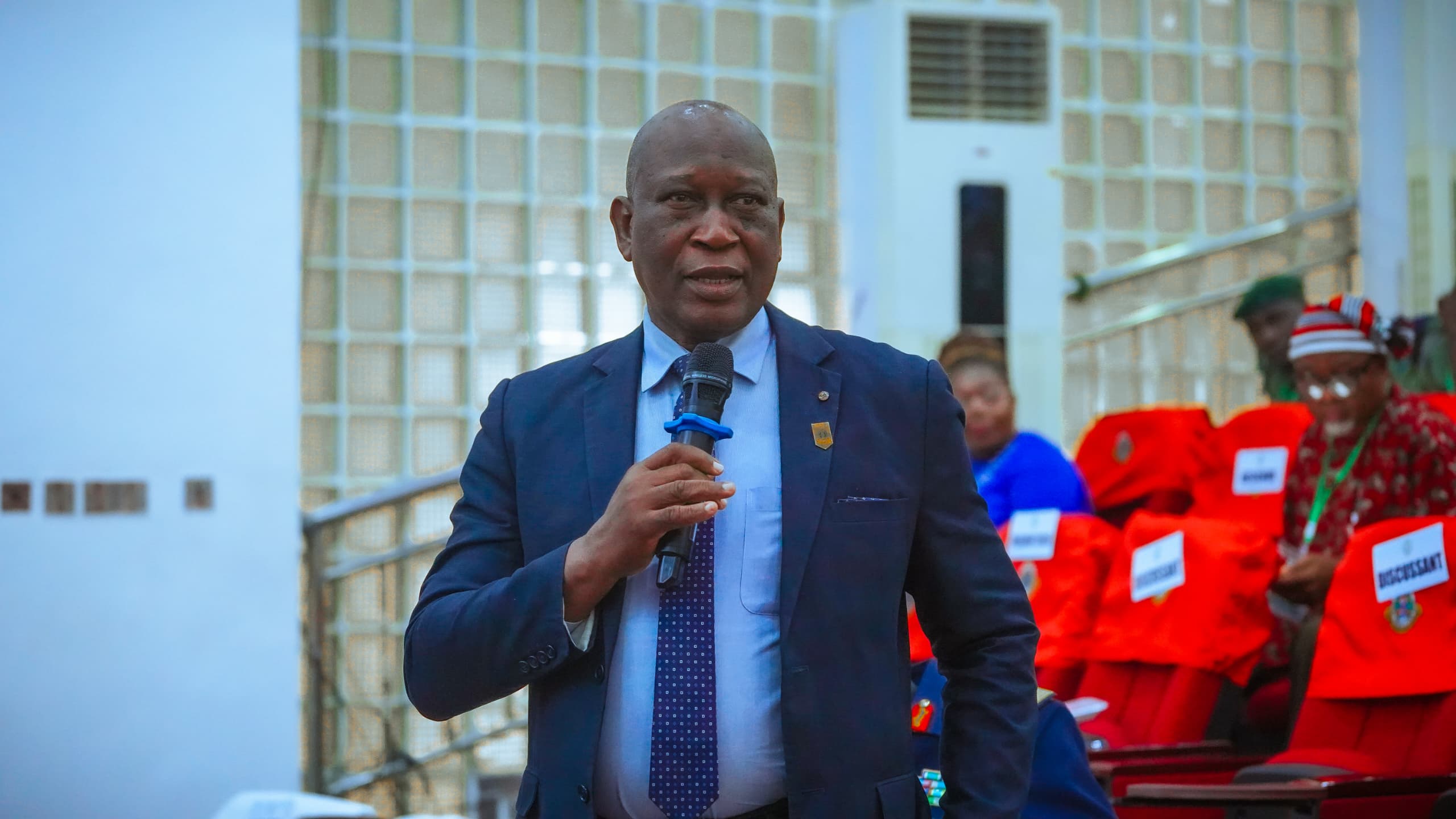
The Chairman of the Centre for Crisis Communication (CCC), Major General Chris Olukolade (Rtd.), has emphasised that shaping narratives around national security should not be left to the military alone, but must involve the media and the wider society.
Olukolade made this submission during a panel discussion at the 2026 Defence Headquarters Strategic Communication Workshop, held on 24 November 2026 at the National Defence College, Abuja.
Speaking during discussions on the paper titled “Framing Narratives and Messages to Enhance National Security,” the CCC Chairman highlighted the influence of media framing on public perception, noting that the way security issues are reported can shape how citizens understand events and the institutions responsible for addressing them.
He observed that, in some instances, editors and media organisations approach stories with preconceived narratives, which can influence the direction and interpretation of their reports. He stressed that communication must therefore be anchored on context, fairness and a relationship of trust between the military and the media.
According to him, building confidence between both institutions is essential to ensuring that information about security operations is communicated responsibly without undermining the media’s duty to inform the public or the military’s responsibility to protect sensitive operational information.
Olukolade further maintained that the responsibility for shaping national security narratives extends beyond the Armed Forces, stressing that the entire society has a role to play in promoting understanding, national cohesion and public confidence.
He concluded that “narrative is not just the problem and business of the military, but the whole of society.”
The workshop, themed “Enhancing Strategic Collaboration Between Spokespersons of Security Agencies and Media Stakeholders for Accurate and Responsible Reportage Towards Improved National Security,” brought together senior military officers, security communication practitioners, defence correspondents, media executives, editors, online publishers and other stakeholders.
The event featured contributions from the Chief of Defence Staff, General Olufemi Oluyede; Minister of Information and National Orientation, Alhaji Mohammed Idris, represented by the Director-General of Voice of Nigeria, Mallam Jibrin Baba Ndace; and former Minister of Youth and Sports Development and Special Adviser to the President on Media and Public Communication, Chief Sunday Dare.
Other contributors included Professor Abdullahi Saleh Bashir of the University of Abuja and Director of News at TVC, Babajide Kolade-Otitoju.
In his presentation, Professor Bashir explained that the framing of security incidents could significantly influence public understanding, identifying protection, patriotism, partnership, peace-building, professionalism and the human dimension of military service as important approaches to security communication.
Another session examined “Understanding Military Operations and Their Sensitivities: A Guide for Effective and Responsible Defence Reporting,” with discussions focusing on the need for journalists to understand military operations and the possible consequences of careless reporting.
Speaking during the session, Alhaji Yushau Shuaib, Managing Director and Chief Executive Officer of PRNigeria and Lead Consultant to CCC highlighted the different responsibilities and expectations of the military and the media. While the military is concerned with operational security and the protection of sensitive information, journalists have a professional responsibility to uphold press freedom and keep the public informed.
He called for a practical middle ground that recognises the legitimate interests of both institutions, stressing the importance of newsworthiness, ethical reporting and accuracy. He also encouraged media organisations to strengthen their financial independence through sustainable funding models.
Shuaib emphasised that both sides must understand the interests and limitations of the other, noting that responsible defence reporting requires journalists to weigh the public interest in a story against its possible security implications.
Earlier, the Minister of Information and National Orientation, through his representative, Jibrin Baba Ndace, stressed that strategic communication was vital to national security, noting that accurate, timely and credible information helps build public trust and supports security operations.
Ndace also cautioned that careless reporting could put the lives of innocent citizens and military personnel at risk, underscoring the need for journalists and military personnel to understand one another’s professional responsibilities.
He called for practical measures to strengthen cooperation, including regular security briefings, clear communication channels and prompt correction of inaccurate reports.
The workshop underscored the need for sustained engagement, mutual understanding and practical collaboration between the military and the media, particularly as misinformation, disinformation and emerging technologies continue to shape the information environment.
For the Centre for Crisis Communication, the discussions reinforced the importance of coordinated, responsible and trust-based communication as an essential component of national security.